Overview
Employee departures are a natural part of the employment cycle and can occur due to voluntary resignation or company-initiated termination. This process often involves multiple tasks for the Human Resources (HR) department.
To streamline this, Bizagi offers an Offboarding Process template designed to help companies manage all activities related to an employee’s departure. These activities include stopping payroll and benefits, revoking security access, collecting company property, and more.
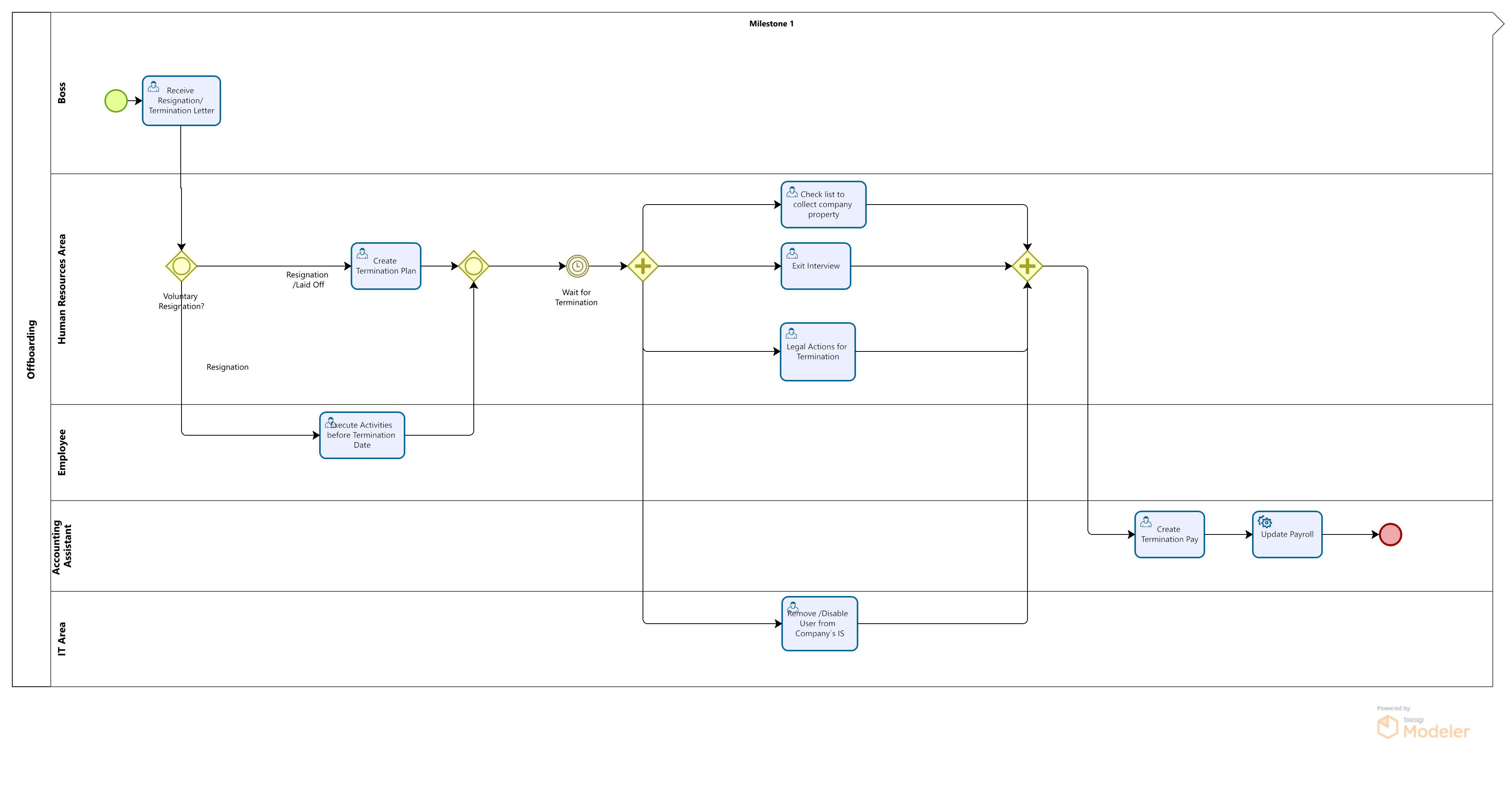
The process begins when an employee is scheduled to leave the company, whether through resignation or termination. The first step is to determine if the departure is voluntary or involuntary.
•Voluntary resignation: The employee’s manager can create an activity plan to be completed before the departure date.
•All cases: HR must perform the Create Termination Plan task, which defines the necessary actions for the offboarding process.
As the termination date approaches, several key activities must be completed:
1.Collect company assets such as laptops, phones, and access cards.
2.Conduct an exit interview to gather feedback for improving work conditions and retention programs.
3.Remove the employee from payroll, healthcare, and other benefits.
4.Disable or cancel access to company systems and information.
Finally, the process concludes with financial settlement, which includes unpaid salary, compensation, and any applicable damages. Payroll records must also be updated accordingly.
To install this accelerator in your project, follow the steps outlined in the Process Xchange article.
Bizagi Modeler Process Description (BPM)
The complete documentation of this process can be found within its Bizagi Modeler file (.bpm). From there, you can generate a Word document with all its information.
Foundations for Process Construction
Data Model
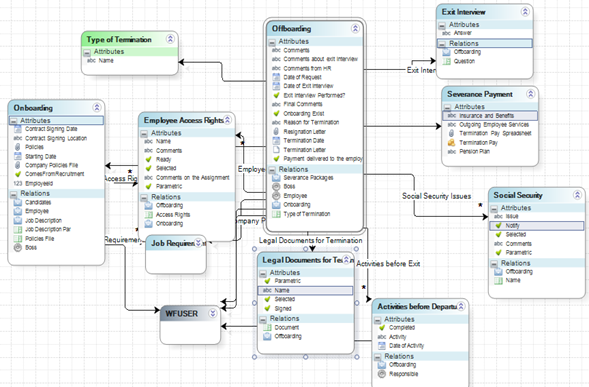
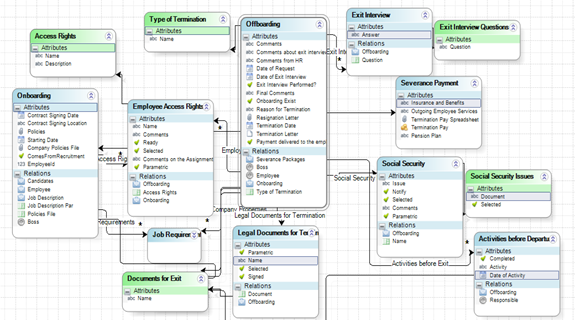
The Business Process entity is Offboarding. It holds information about the departure of employees, such as termination date, type of termination, reason for termination, etc. The entity is related to the Employee Access Rights, Exit Interview, Social Security, Activities before Departure, Legal Documents for Termination and Job Requirements. The relationship between them is one to many.
•If the Onboarding Process template was used when the employee joined the company, the corresponding Offboarding case will be linked to it. This connection allows the Offboarding Process to access relevant information, such as system access granted and items provided during onboarding.
•Key elements like Employee Access Rights, Exit Interview, Social Security, Legal Termination Documents, and Job Requirements are managed through parameter tables. In activities that use these tables, the information is automatically loaded. Additionally, new records can be added at any point during the case lifecycle.
Parameter Tables
The model includes several parameter tables.
•The Legal Documents for Termination entity stores all the legal documents that the employee must sign during the offboarding process.
•The Social Security entity contains the organizations from which the employee must be disenrolled.
•Additionally, the entities Access Rights, Exit Interview Questions, and Social Security Issues include suggested records for each case.
Note: It is essential to review and configure these entities according to your company’s requirements and the regulations of the countries where you operate. The information maintained will vary based on these factors.
Access Rights, Exit Interview Questions and Social Security Issues Parametrization
It is essential to include in each table the information your company considers necessary for the employee’s departure.
For example:
•In the Exit Interview Questions entity, add the specific questions your company uses for exit interviews.
•In the Access Rights entity, include the typical permissions assigned during employment, such as network user credentials, email address, and general access to folders or servers. Unlike onboarding, these permissions must be canceled or disabled during offboarding. The manager can also add any additional access rights to the case that are not listed in the general table when an Offboarding case begins.
To manage these entities in the Work Portal, follow these steps:
1. Go to the Admin menu at the top of the User’s Work Portal. Click Process Management and select Entities.

2. Click on the Exit Interview Questions entity, and then click the + button to add an exit interview question.
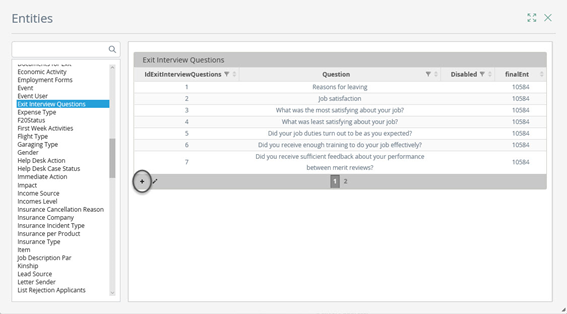
3. Enter the question. Add all the questions you consider necessary for the interview.

Define Forms
The Offboarding Process includes several tables that store information such as legal documents and employment-related elements. To simplify data management, the process automatically loads previously configured (parametrized) information. However, you can edit, remove, or add additional entries to these tables within the corresponding activities.
Create Termination Plan Forms
In this activity, a Human Resources Analyst must determine the actions required for an employee’s departure. These actions may include identifying the documents the employee must sign, the items to be returned, and the entities from which the employee must be removed.
The process provides suggested records for each case; however, the analyst may need to add additional records. To support this, two tables are available for each entity: one containing the suggested records and another for the records entered by the analyst.
For example, the process may suggest termination-related documents such as a Termination Agreement, Confidentiality Agreement, and Exit Medical Examination, among others.

You can add a new document by clicking the Add Document link. The document will then appear in the Additional Documents for Termination table.
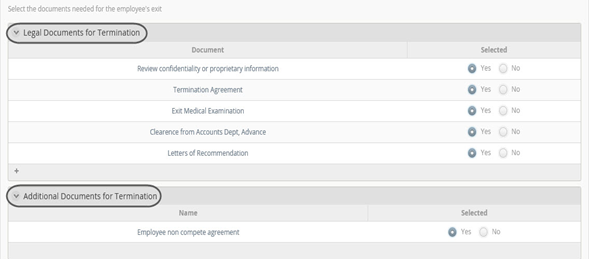
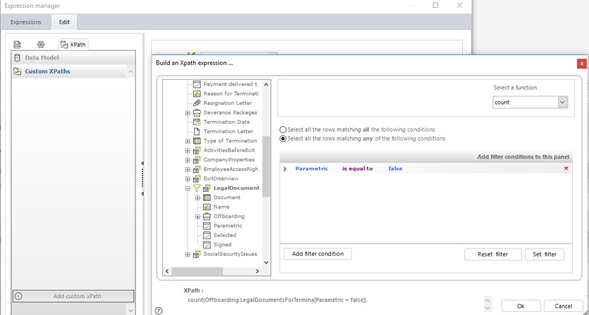
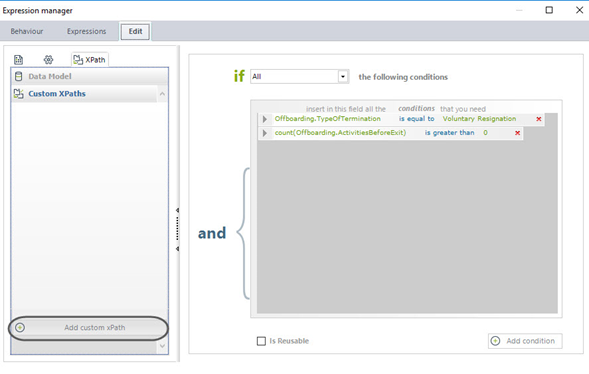
The Additional Documents for Termination table is controlled by a visibility rule: it is displayed only if the analyst has added at least one new document.
Business Rules
Activity Actions
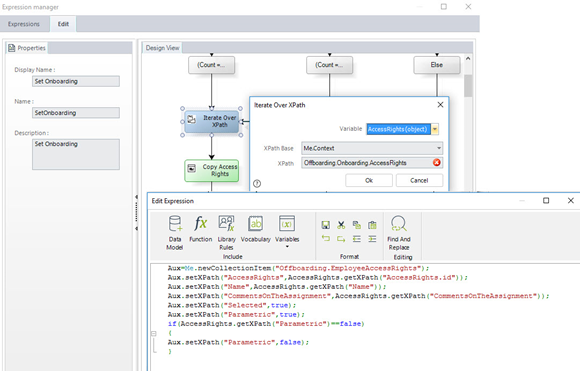
If the Onboarding process template was used for the entry of this employee, it is necessary to load the access granted to the company´s system in the Onboarding Process. Thus an On Save expression is used for the Receive Resignation/Termination Letter task.
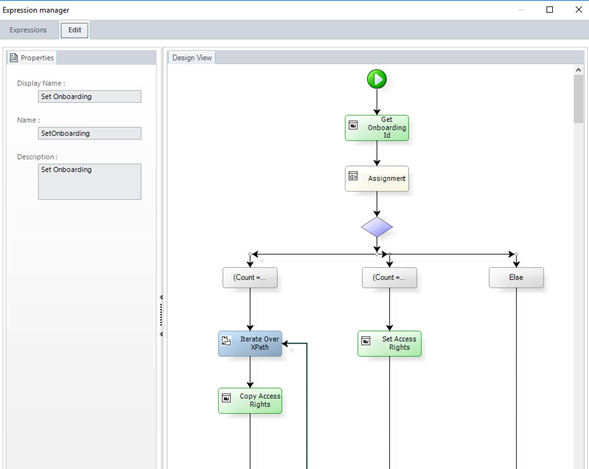
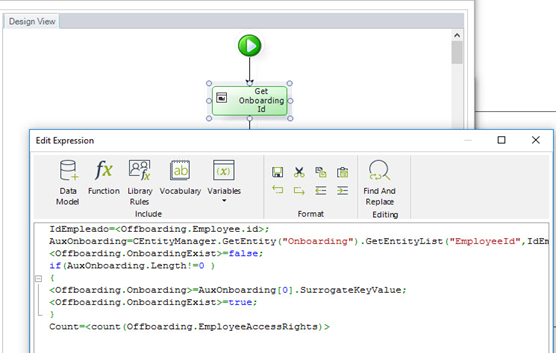
If the entry of the employee was made using the Onboarding Process template, the access rights granted are loaded from the Onboarding Process, if not, the information is loaded from a parameter table.
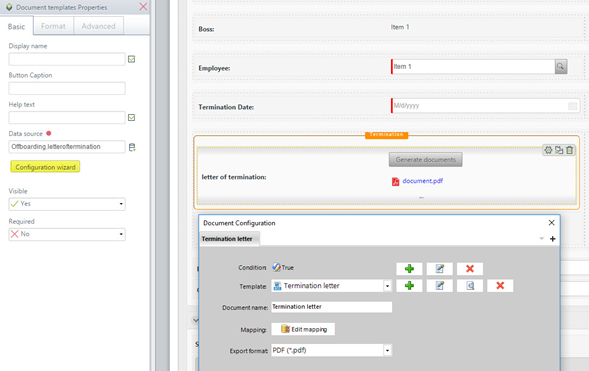
A button will be available in the Receive Resignation or Dismissal Letter task to create the dismissal letter in PDF format.
This sample termination letter serves as a formal communication to notify an employee of the end of their employment with the company. It outlines the effective termination date, the reasons for termination, and provides important details regarding severance payments, insurance coverage, and the return of company property, ensuring compliance with company policy and legal requirements.
Dear
[Employees’s name]
It is with regret that I must inform you that your employment at "Company Name " will be terminated as of [Termination date] for the following reasons:
[Termination reasons]
Severance payments will be made in accordance with company policy. I recommend that you beg to plan for your future insurance needs because the company will not maintain insurance coverage for you beyond the date of termination.
Please arrange to return any company property that is in your possession.
Although we regret the situation, this act is compulsory.
Respectfully,
Human Resources
In the following activities, some information is loaded automatically from parameter tables.
Create Termination Plan
-Exit Interview
The next example has been taken from the Set Exit Interview Questions from the Exit Interview activity.
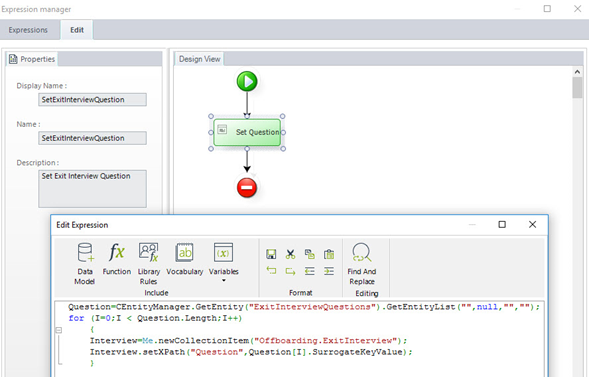
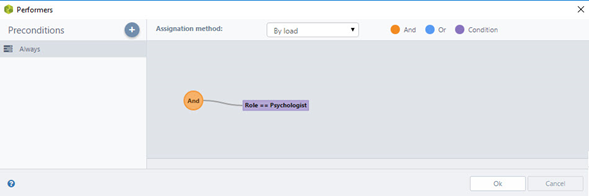
Performers
A Wizard is used to define the performers in the process. In Step 5 of the Wizard, click Define Performers.
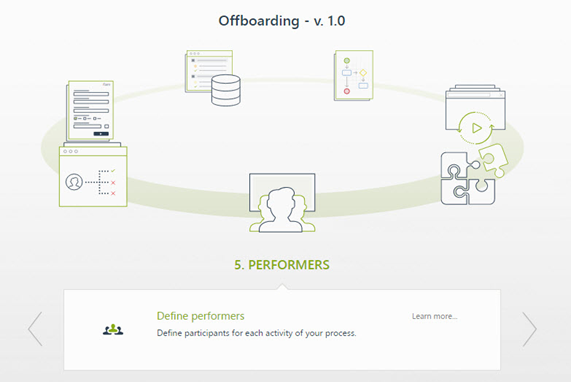
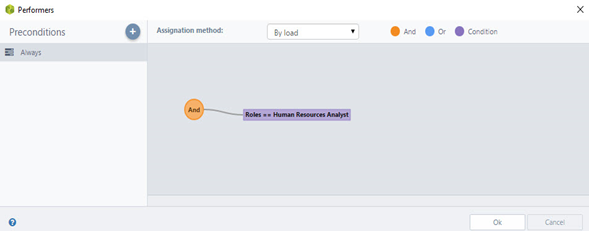
The following activities are performed by a Human Resources Analyst: Create Termination Plan, Check List to Collect Company Property, and Legal Actions for Termination.
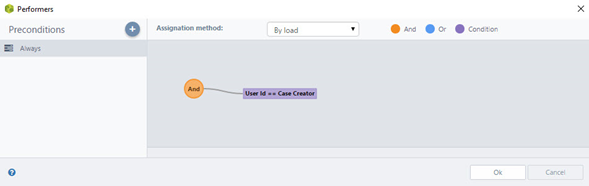
The Receive Termination/Resignation Letter activity is performed by the boss of the person that is leaving the company.
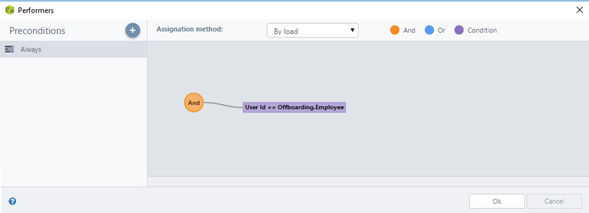
The Execute Activities before Termination Date is performed by the person who is leaving the company.
A HR psychologist performs the Exit interview task.
E-Mail Configuration
For more details on configuring email server authentication, refer to the E-mail services article.
Last Updated 1/19/2026 2:52:55 PM