Overview
A Deployment package lets you apply changes to a target environment (for example, Test or Production).
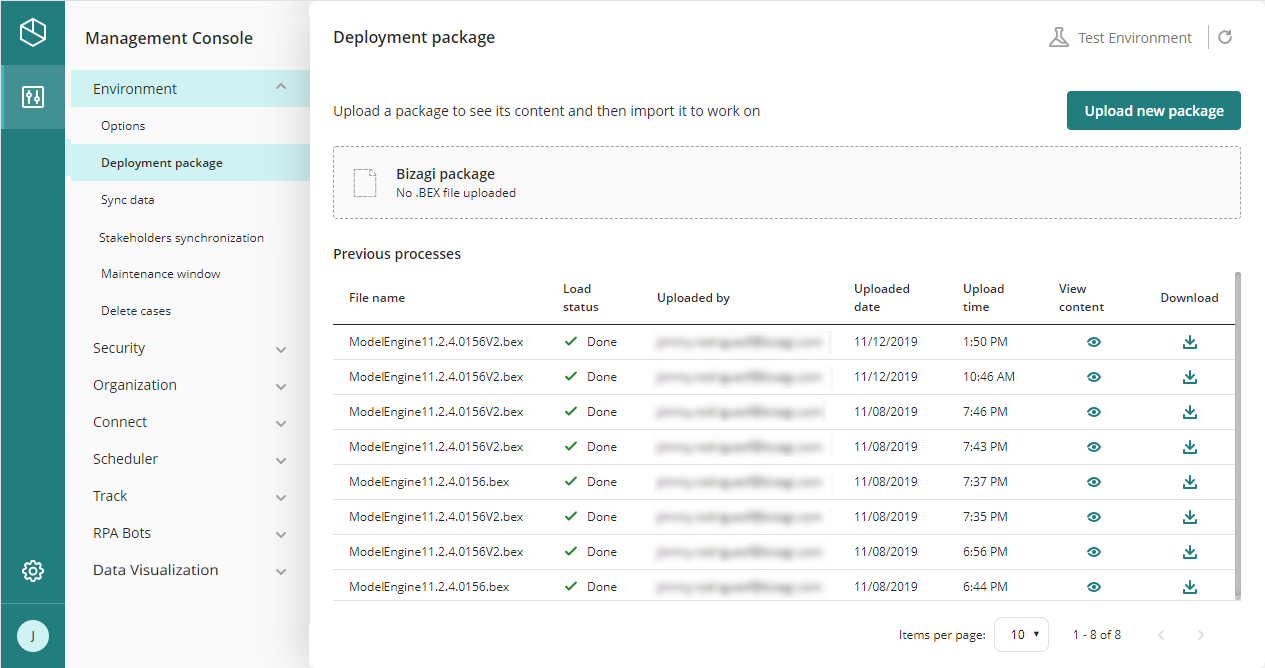
Importing a Deployment Package
Follow these steps to import a deployment package:
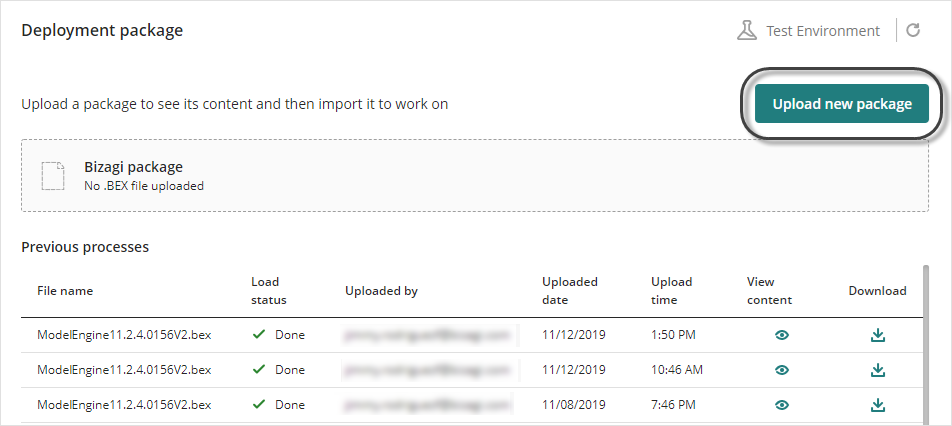
1. Click Upload new package.
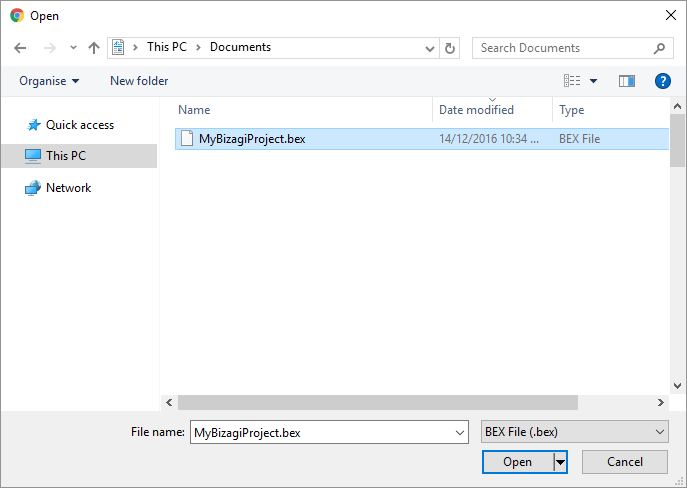
2. Select the .bex file containing the deployment package.
The file name itself has no functional significance, but make sure you select the correct file.
3. Confirm the action by clicking Upload package.
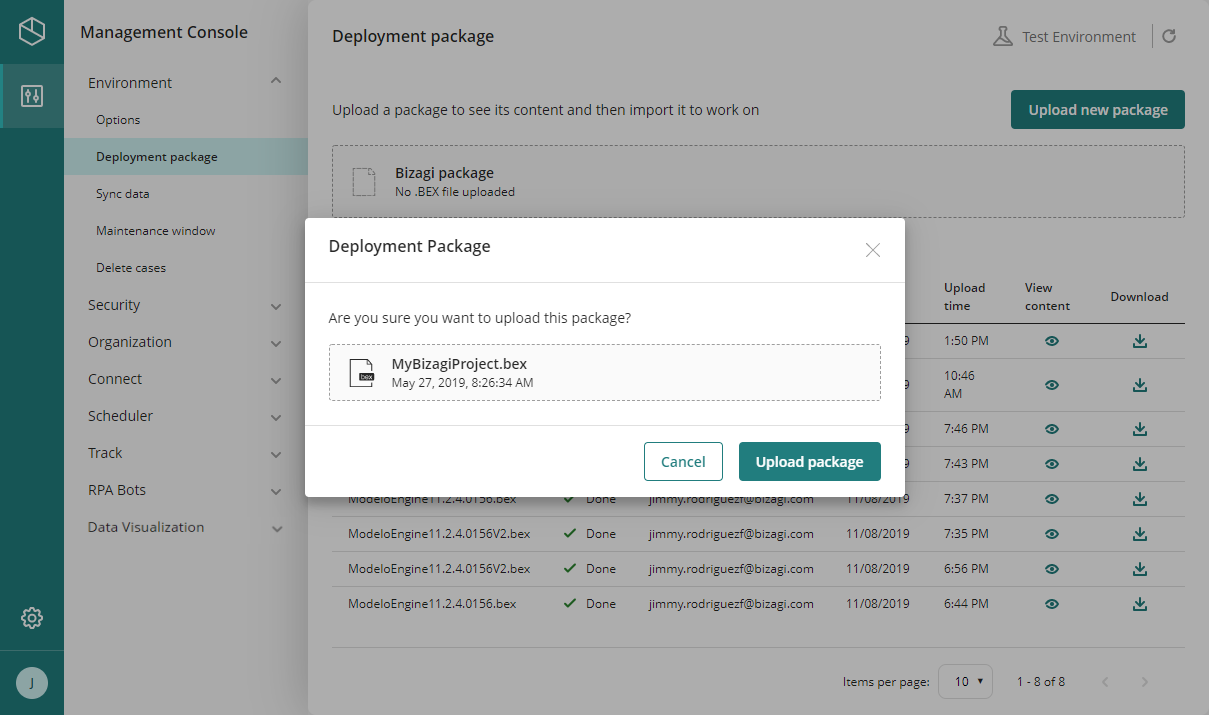
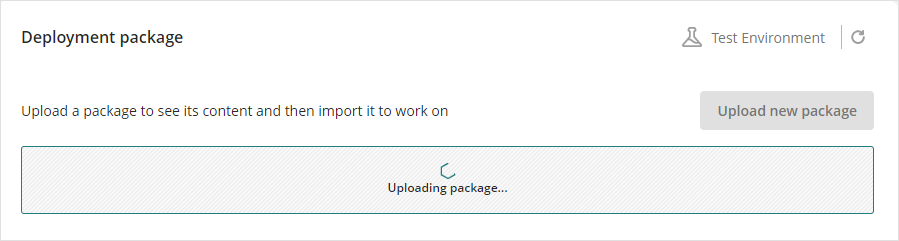
The upload and import process may take a few minutes.
Once completed, the package details are displayed. You can view the package contents using the Package Visualizer (View content button), compare the package contents against the target environment before applying it through Delta Comparison, or Cancel the upload if necessary.
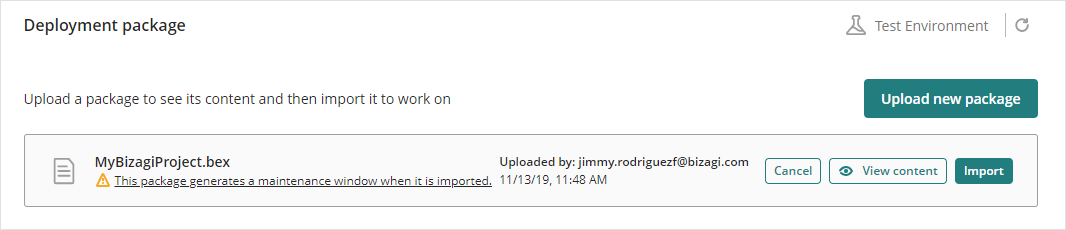
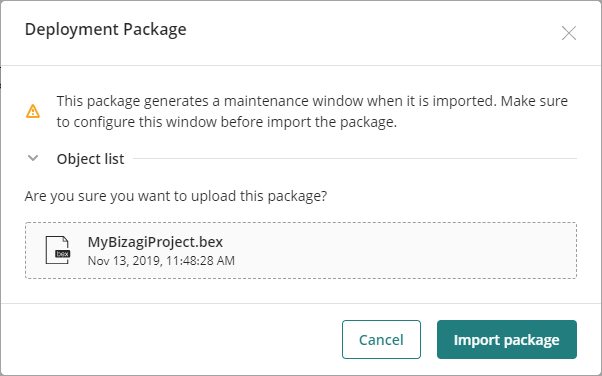
To apply the package to your environment, click Import. A window will appear indicating that the Maintenance Window will start.
You can also click Object list to see which objects in the package have changed.
|
Some configurations are managed directly per environment through the Management Console (e.g., environment settings, authentication/authorization, external systems). Other configurations, such as Live Processes, theme builder, and localization, are managed in the Work Portal.
If a deployment package contains metadata related to parameters or environment configuration, these are applied only during the first deployment. Subsequent deployments do not overwrite them. Environment configurations must be managed directly in the Management Console or Work Portal, and they override any package settings. |

Click Import package to confirm.
When the procedure completes successfully, the deployment details are added to the history with status Done. If the process fails, an error message appears.
Deployment Maintenance Window
Deployments usually do not require a Maintenance Window or environment reset. However, the Maintenance Window is automatically triggered under these conditions:
•First deployment
•The .bex file contains environment configurations
•Deployment of Component libraries
•Deployment of Library rules
•Structural changes to Entities, Attributes, or Collections (e.g., changing an attribute type)
•Deployment packages containing more than 20,000 objects
If none of these conditions apply, you can import the package without halting the environment. End‑users can continue working in the Work Portal while the package is applied.
Considerations
•For critical or significant process changes, perform an environment reset. Examples include changing attribute types, validation rules, or rules affecting process flow.
•Be cautious when deploying changes that affect task or process execution. For example, altering an attribute type may impact rules or forms. If users encounter issues after deployment, refresh the site so forms reload with the updated configuration.
Deployment History
The Previous processes table shows past deployments. It includes the following columns:
NAME |
DESCRIPTION |
|---|---|
File name |
Name of the deployment package. |
Load status |
Result of the package upload. Possible values are Error and Done. |
Uploaded by |
Name of the user who uploaded the deployment package. |
Uploaded date |
Date when the deployment package was uploaded. |
Upload Time |
Time when the deployment package was uploaded. |
View content |
Opens the Package Visualizer to see the content of the deployment package (available if the package was successfully applied). |
Download |
Downloads a copy of the deployment package (available if the package was successfully applied). |
Last Updated 7/14/2026 11:13:04 AM